Comparison · 04 contenders · bookshelf speakers
Four bookshelf speakers under $500, compared
Four passive bookshelf speakers spec by spec — driver size, stated frequency range, sensitivity, cabinet depth — and the port position that decides it.
Quang Sang2 min
The pick
B6
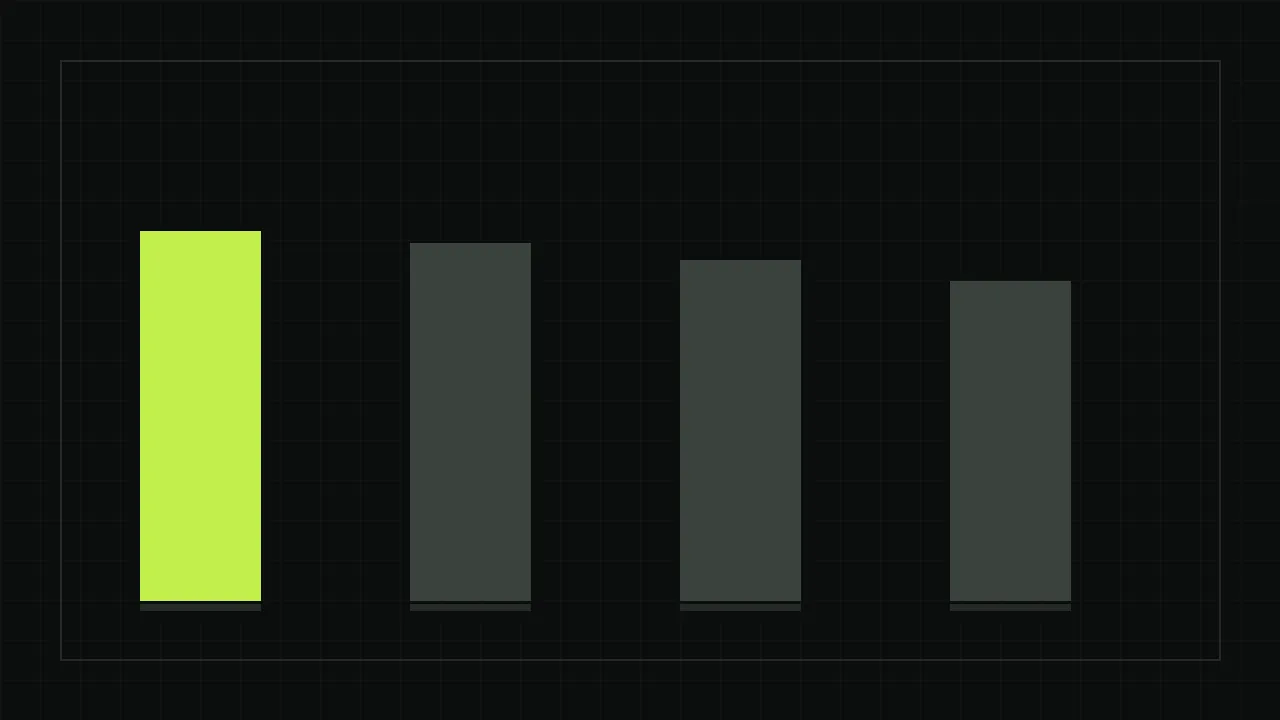
The Alder B6 wins because it is the only front-ported speaker in the set, which means it is the only one that still sounds right pushed back against a shelf — where a bookshelf speaker actually lives. It is not the most sensitive here and its cabinet is the largest, but the port position removes a constraint the others impose.
- Price
- $399as of Mar 04, 2026
- Score
- 8.8/ 10
- Best for
- Shelves and walls
Some links on this page are affiliate links. If you buy through one, this site may earn a commission at no extra cost to you. It never changes which product wins.
Scoreboard
Spec matrix
4 contenders · 8 rows
| Spec | B6 | Q150 | D12 | RP500 |
|---|---|---|---|---|
| PriceSpec | $399 | $449 | $499 | $349 |
| WooferSpec | 16.5 cm | 13 cm | 16.5 cm | 13.3 cm |
| Stated frequency rangeSpec | 44 Hz – 35 kHz | 51 Hz – 28 kHz | 45 Hz – 20 kHz | 48 Hz – 25 kHz |
| SensitivitySpec | 87 dB | 86 dB | 86.5 dB | 92 dB |
| Cabinet depthSpec | 26 cm | 24 cm | 25 cm | 21 cm |
| Port positionSpec | Front | Rear | Rear | Rear |
| WarrantySpec | 3 years | 2 years | 2 years | 5 years |
| Placement near a wallHands-on | Unaffected | Needs a bung | Needs a bung | Needs a bung |
Spec — manufacturer-published. Hands-on — observed here, not measured. Highlighted cells lead their row.
Contender breakdown
Alder B6
The pick · Best for — Shelves and walls
8.8
Strengths
- Front port works close to a wall
- Largest woofer in the set
- Widest stated frequency range
Trade-offs
- Deepest cabinet here
- Heaviest of the four
$399Example Store →
Quill Q150
Best for — Open stands, away from walls
8.5
Strengths
- Smallest cabinet of the four
- Coaxial driver keeps the image stable off-axis
Trade-offs
- Rear port needs clearance behind it
- Most expensive here
$449
Marlow D12
Best for — Cabinet finish
8.1
Strengths
- Best-finished cabinet in the set
- Matches the Alder on woofer size
Trade-offs
- Narrowest stated frequency range
- Rear ported
$499
Torrey RP500
Best for — Low-powered amplifiers
7.6
Strengths
- Much the most sensitive here
- Cheapest of the four
- Longest warranty
Trade-offs
- Brightest of the set in use
- Rear ported
$349
Every row in the matrix above except the last one is a manufacturer-published figure, reproduced as published. The last row is an observation made while using these speakers, and it is tagged that way — this site has no measurement equipment and never presents a number as if it did.
What the published numbers can and cannot settle
Woofer size and cabinet depth are physical and comparable, and they mostly agree with each other: the Alder is the biggest speaker here and the Torrey the smallest.
Stated frequency range is the row to be most careful with. None of these four publish a tolerance alongside it, so “44 Hz” from one maker and “45 Hz” from another are not measured the same way and should not be read as a difference.
Sensitivity is the most directly useful figure in the table, because it predicts something concrete: how much amplifier you need.
The row that decided it
Port position is not a performance specification. It is a constraint. A rear-ported speaker pushed against a wall gets a bass lift it was not designed for, and the usual fix — a foam bung — trades the problem for a thinner sound.
The Alder is the only front-ported speaker in this set. On an open stand, the Quill is arguably the better speaker and the matrix nearly says so. On a shelf, which is where most of these end up, the Alder wins without an argument.
What this comparison does not cover
Powered and active speakers, anything with a built-in phono stage, and any streaming protocol. These are four passive speakers judged as passive speakers.
Questions
Does a wider stated frequency range mean deeper bass?
Not on its own. Makers publish these ranges under conditions they choose and rarely state the tolerance, so two numbers that look comparable often are not. Treat the row as a rough sort, not a ranking.
What does sensitivity change in practice?
How loud a speaker plays for a given amount of amplifier power. The Torrey's 92 dB figure means it will go usefully louder than the others on a small amplifier — which is why it wins that row even though it loses the comparison.
Can a rear-ported speaker go on a shelf?
With a foam bung and some clearance, yes, but it is a compromise the front-ported Alder does not ask you to make.